
2Department of Environmental Engineering, Faculty of Engineering, Erciyes University, Kayseri, Türkiye;Research and Application Centre For Environmental Problems and Cleaner Production, Erciyes University, Türkiye
Abstract
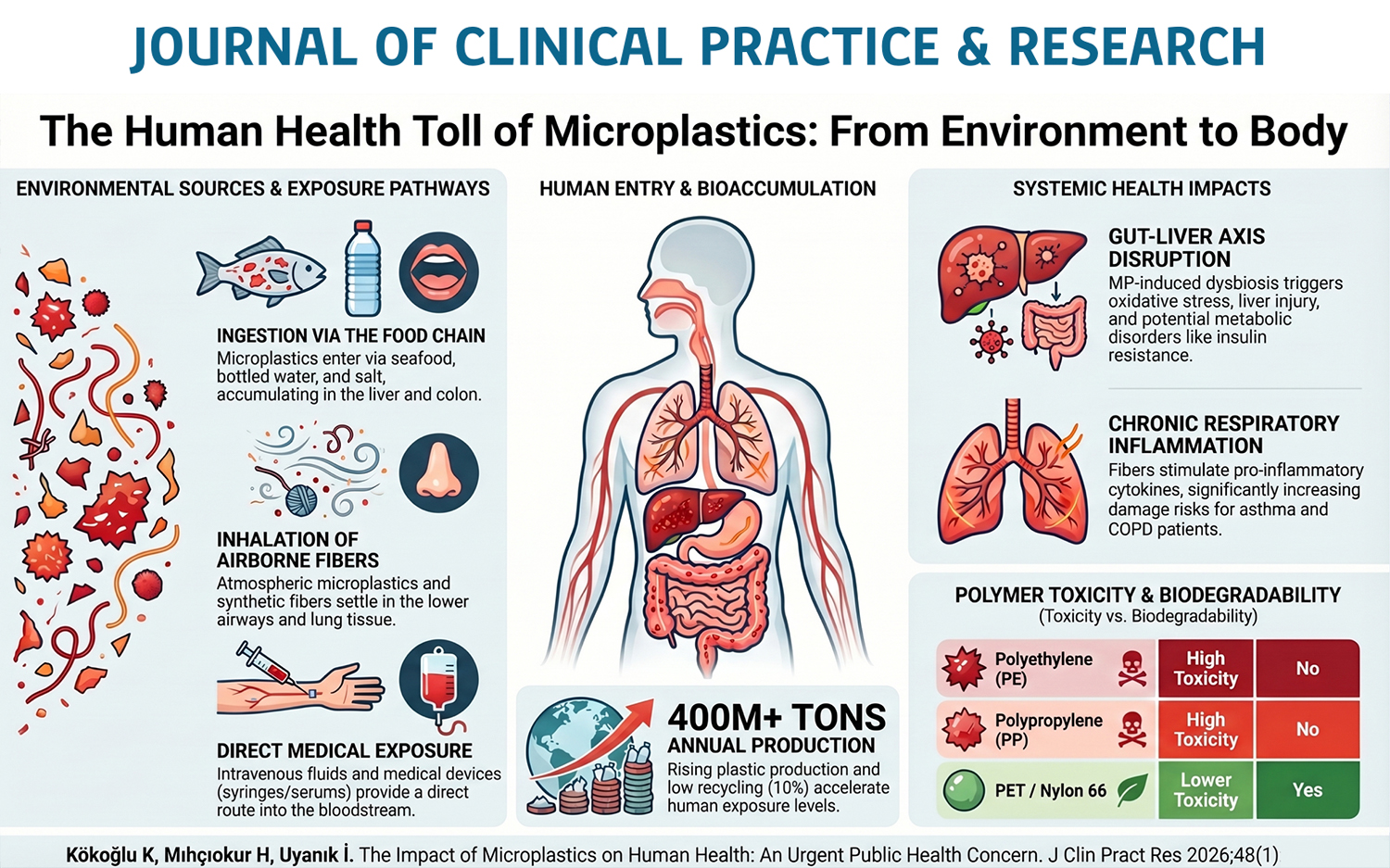
Microplastics (MPs) have rapidly become one of the most pervasive pollutants in the modern world. Far from being confined to oceans or waste sites, these tiny particles now circulate through the air we breathe, the water we drink, and the food we eat. As everyday plastic items break down over time, they form microscopic fragments that can travel long distances and enter the human body through inhalation or ingestion. Once inside the body, these particles may accumulate in organs and interact with biological systems in ways that scientists are only beginning to understand. This review synthesizes current scientific findings on the formation of MPs, their pathways into and persistence within the human body, and their potential health impacts. Although there is no standardized method for measuring MPs, the main analytical techniques used for biological samples are discussed. Furthermore, the toxicity and environmental impacts of plastic types to which humans are exposed are assessed using the EPI Suite™ program developed by the U.S. Environmental Protection Agency (USEPA). Certain MP types, such as polyethylene and polypropylene, appear more toxic due to their low biodegradability. Although evidence increasingly identifies MPs as a growing public health concern, many questions remain unanswered. Health effects related to gastrointestinal and respiratory health systems are examined, while long‑term effects, behavior in human tissues, and associations with chronic diseases—including potential links to cancer—require further multidisciplinary investigation. As global plastic use continues to rise, understanding and mitigating MP exposure will be essential for protecting human health.
Graphical Abstract