 , Şule Altıner 2
, Ahsen Karakaya 3
, Sadiye Ekinci 2
, Timur Tuncalı 2
, Nüket Yürür Kutlay 2
, Ezgi Gökpınar İli 2
, Halil Gürhan Karabulut 2
, Sim Kutlay 1
, Şule Şengül 1
, Kenan Keven 1
, Gökhan Nergizoğlu 1
, Şehsuvar Ertürk 1
, Hatice Ilgın Ruhi 2
, Kenan Ateş 1
, Şule Altıner 2
, Ahsen Karakaya 3
, Sadiye Ekinci 2
, Timur Tuncalı 2
, Nüket Yürür Kutlay 2
, Ezgi Gökpınar İli 2
, Halil Gürhan Karabulut 2
, Sim Kutlay 1
, Şule Şengül 1
, Kenan Keven 1
, Gökhan Nergizoğlu 1
, Şehsuvar Ertürk 1
, Hatice Ilgın Ruhi 2
, Kenan Ateş 1
2Department of Medical Genetics, Ankara University Faculty of Medicine, Ankara, Türkiye
3Department of Internal Medicine, Ankara University Faculty of Medicine, Ankara, Türkiye
Abstract
Objective: Inherited kidney diseases (IKDs) significantly contribute to chronic kidney disease (CKD), particularly in regions with high consanguinity rates. Despite the increasing availability of next-generation sequencing, evidence regarding its diagnostic and clinical effectiveness in adult populations remains limited. This study evaluated the diagnostic yield and clinical implications of genetic testing in adults with suspected IKD.
Materials and Methods: A retrospective analysis of 63 adults who underwent genetic evaluation for unexplained or familial CKD was performed. Genetic testing used sequencing-based methods to identify and analyze genes relevant to the clinical phenotype. Clinical and demographic factors, diagnostic yield, genetic etiologies, and clinical utility were documented.
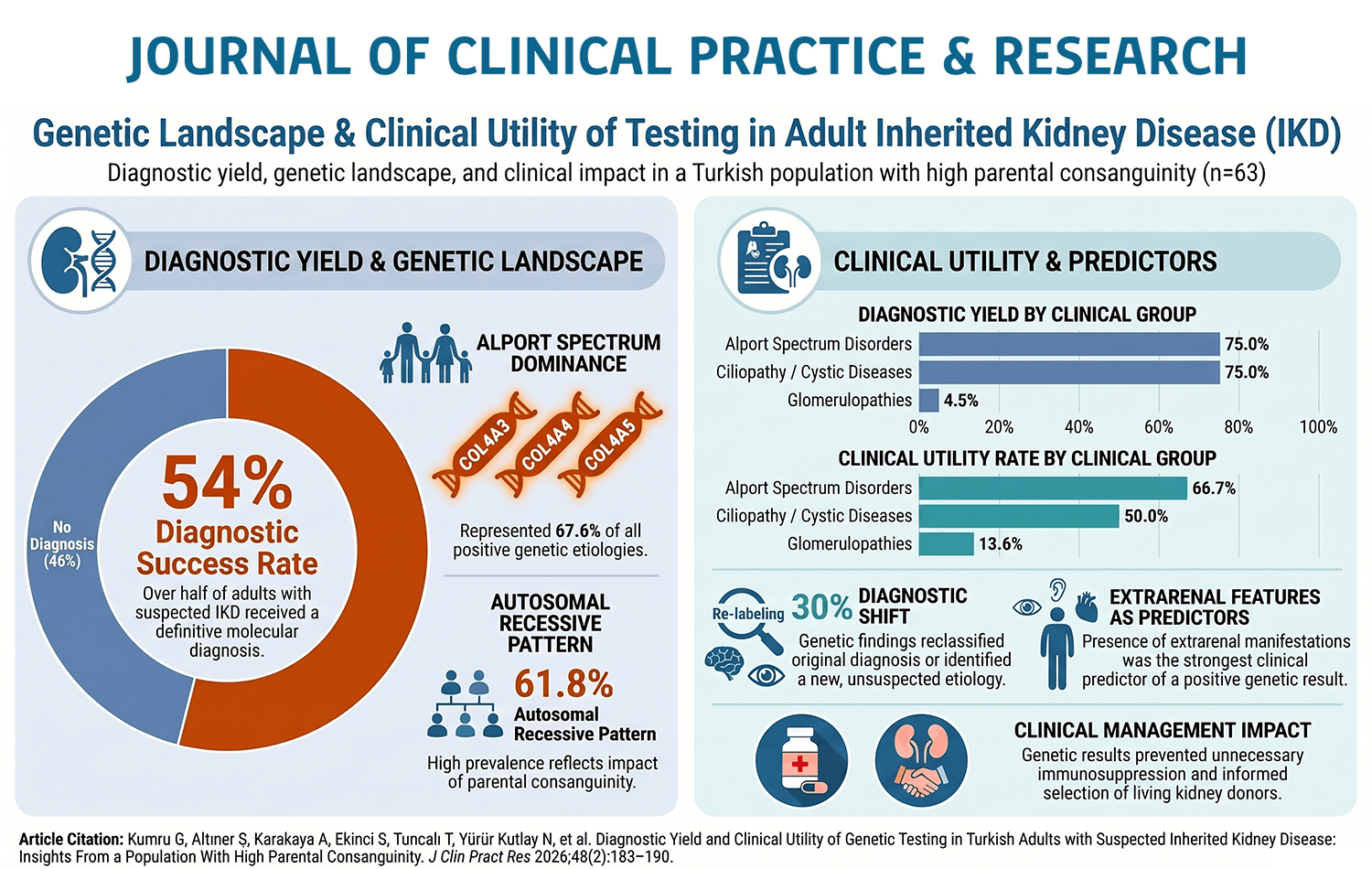
Results: The genetic diagnostic yield in this predominantly female cohort, with a mean age of 37.2±14.9 years, was 54.0%. Autosomal recessive disorders were the most common inheritance pattern (61.8%). Alport spectrum disorders represented the primary etiology (67.6%), followed by ciliopathies/cystic diseases (14.7%). The diagnostic yield varied across clinical diagnostic groups, with Alport spectrum disorders showing the highest yield and other glomerulopathies showing the lowest yield (75.0% vs. 4.5%, p<0.001). Extrarenal manifestations were significantly associated with a positive genetic diagnosis (32.4% vs. 0.0%, p<0.001). Genetic findings confirmed the clinical diagnosis in 70.6% of positive cases, reclassified the diagnosis in 17.6%, and identified an alternative genetic diagnosis in 11.8%.
Conclusion: Genetic testing demonstrated a high diagnostic yield and considerable clinical utility in Turkish adults with suspected IKD. These findings support the integration of genetic evaluation into routine nephrology practice, particularly for patients with syndromic features and a notable family history.
Graphical Abstract