
Abstract
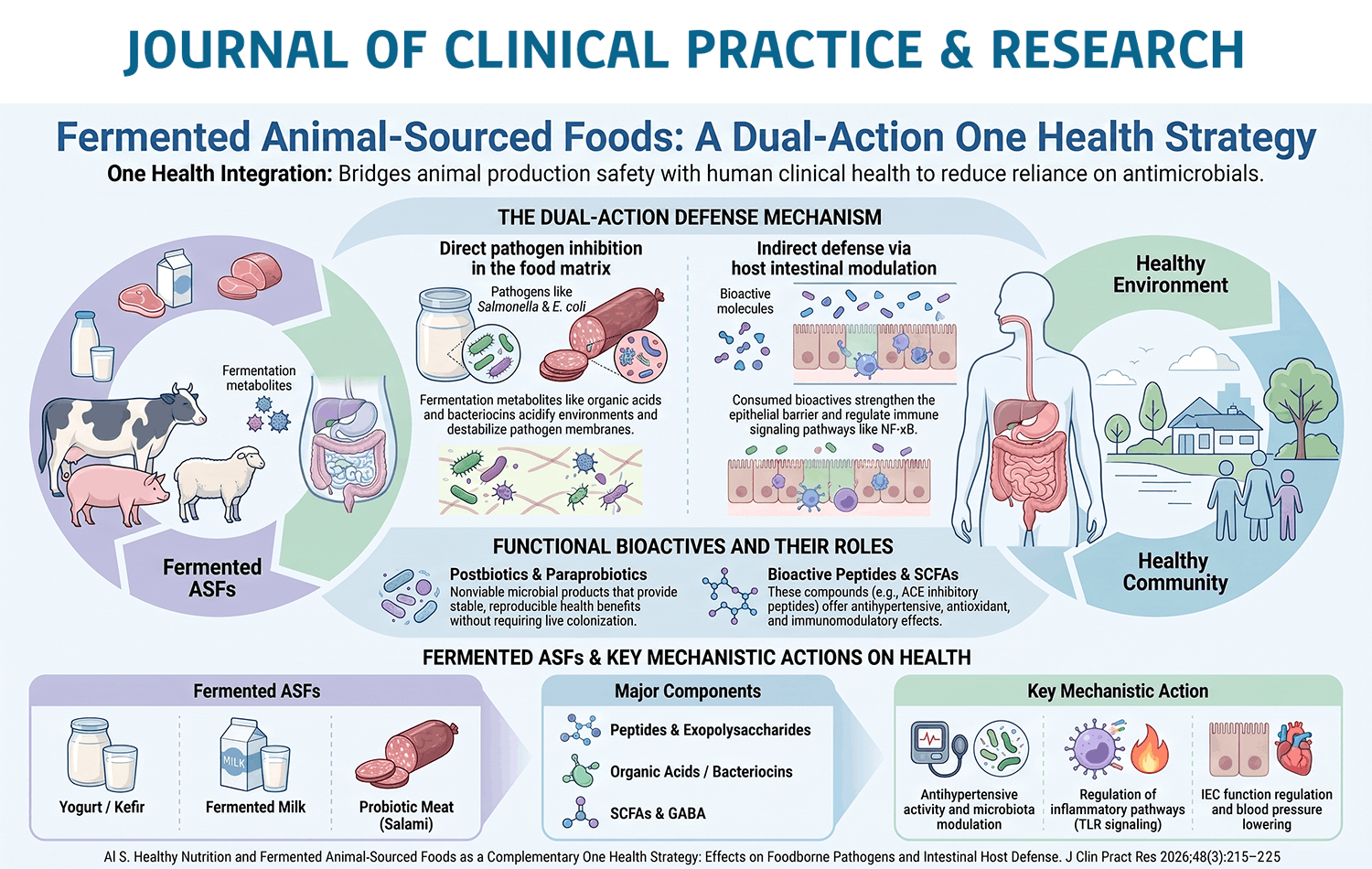
Foodborne diseases remain a major global public health challenge at the interface of human, animal, and environmental health, emphasizing the need for integrated preventive strategies within the One Health framework. Although animal-sourced foods (ASFs) are essential components of human nutrition, they also serve as important reservoirs and transmission vehicles for foodborne pathogens. Conventional food safety interventions primarily target microbial contamination within food systems but often fail to adequately address host susceptibility, intestinal resilience, and microbiota-mediated defense mechanisms. This review highlights fermented ASFs, nutraceuticals, and nonviable microbial products as complementary One Health interventions that can simultaneously influence pathogen ecology and host defense. Fermentation-derived compounds, including organic acids, bacteriocins, bioactive peptides, and microbial metabolites, exert antimicrobial effects against foodborne pathogens while modulating epithelial barrier integrity, inflammatory signaling pathways, gut microbiota composition, and colonization resistance. Particular emphasis is placed on the mechanistic roles of these functional components in regulating intestinal immunity, including Toll-like receptor-associated signaling, NF-κB-mediated responses, and epithelial protection. The review also discusses multidisciplinary surveillance approaches, the translational relevance of dietary strategies for reducing reliance on antimicrobials, and current challenges related to standardization, safety, and clinical validation. Collectively, fermented ASFs and functional nutritional approaches should not be considered passive dietary components but biologically active tools with the potential to enhance food safety, strengthen gastrointestinal host defense, and support sustainable disease prevention across the interconnected One Health framework.
Graphical Abstract